Muscle Power: The Overlooked Key to Staying Strong and Independent
Most people think staying strong means building bigger muscles. But here’s the truth—it’s not just how strong your muscles are… it’s how quickly you can use them. That ability is called muscle power, and it plays a major role in balance, mobility, and preventing falls as we age.
Vitality Physical Therapy Lakeside
4/27/20262 min read

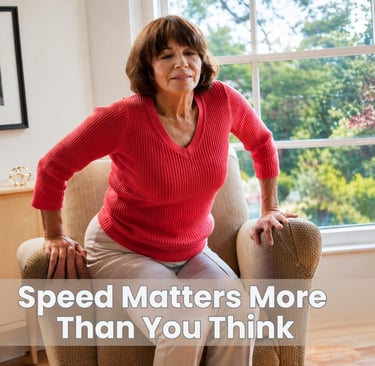
Muscle Power: The Overlooked Key to Staying Strong and Independent
Most people think staying strong means building bigger muscles.
But here’s the truth—it’s not just how strong your muscles are… it’s how quickly you can use them.
That ability is called muscle power, and it plays a major role in balance, mobility, and preventing falls as we age.
Muscle Mass vs. Strength vs. Power — What’s the Difference?
There are three important ways to think about muscle:
Muscle Mass – how much muscle you have
Strength – how much force your muscles can produce
Power – how quickly you can use that strength
Power is essentially strength + speed.
And in real life—whether catching yourself from a fall or stepping quickly off a curb—speed matters just as much as strength .
Why Muscle Power Matters More as We Age
As we get older, something important happens:
Muscle power declines first and fastest
Strength declines next
Muscle mass declines last
This means you may still feel “strong”… but notice:
Slower reactions
Less stability
Difficulty catching your balance
The reason? Changes in the nervous system, which affects how quickly your muscles respond.
Simple Ways to Improve Muscle Power
The good news—this is something you can improve.
You don’t need complicated workouts. Instead, focus on:
Controlled strength exercises (like sit-to-stands or step-ups)
Adding gentle speed to safe movements
Consistency over intensity
Even small changes can help improve reaction time, balance, and confidence in everyday movement.
Why Power Is Critical for Everyday Life
Muscle power isn’t just for athletes—it’s essential for everyday safety and independence.
It helps you:
Catch yourself if you trip
Step quickly to avoid obstacles
Maintain balance when walking on uneven surfaces
In fact, reduced muscle power is strongly linked to a higher risk of falls, which are one of the leading causes of injury in adults over 50.
Improving power can lead to:
Faster reaction times
Better balance
Increased walking speed
Greater confidence in daily activities
How to Train Power Safely
The key is not moving fast at random—it’s intentional, controlled speed.
Some simple examples include:
Standing up from a chair a little more quickly (with control)
Stepping up onto a curb with purpose
Light resistance exercises with a slightly faster movement phase
The goal is not to rush—but to teach your body to respond more quickly when needed.
Even short, consistent routines can make a meaningful difference.
Sources
National Institute on Aging — Muscle Loss and Aging
https://www.nia.nih.gov/health/sarcopenia-muscle-loss-agingHarvard Health Publishing — Power Training for Older Adults
https://www.health.harvard.edu/staying-healthy/power-training-for-older-adultsCleveland Clinic — Fall Prevention
https://health.clevelandclinic.org/fall-prevention/
Contact Information:
Phone: +52 1 222 442 1136 (Whatsapp)
Service Area: North Shore of Lake Chapala, Jalisco
Website by Leissa Gebert | Next Chapter Consulting
@2026 All Rights Reserved
The information on this website is meant to help you better understand your health and wellness but should not replace professional care. If you have questions about your specific needs, give us a call—we’d be happy to schedule a consultation and help you on your journey to feeling your best!